
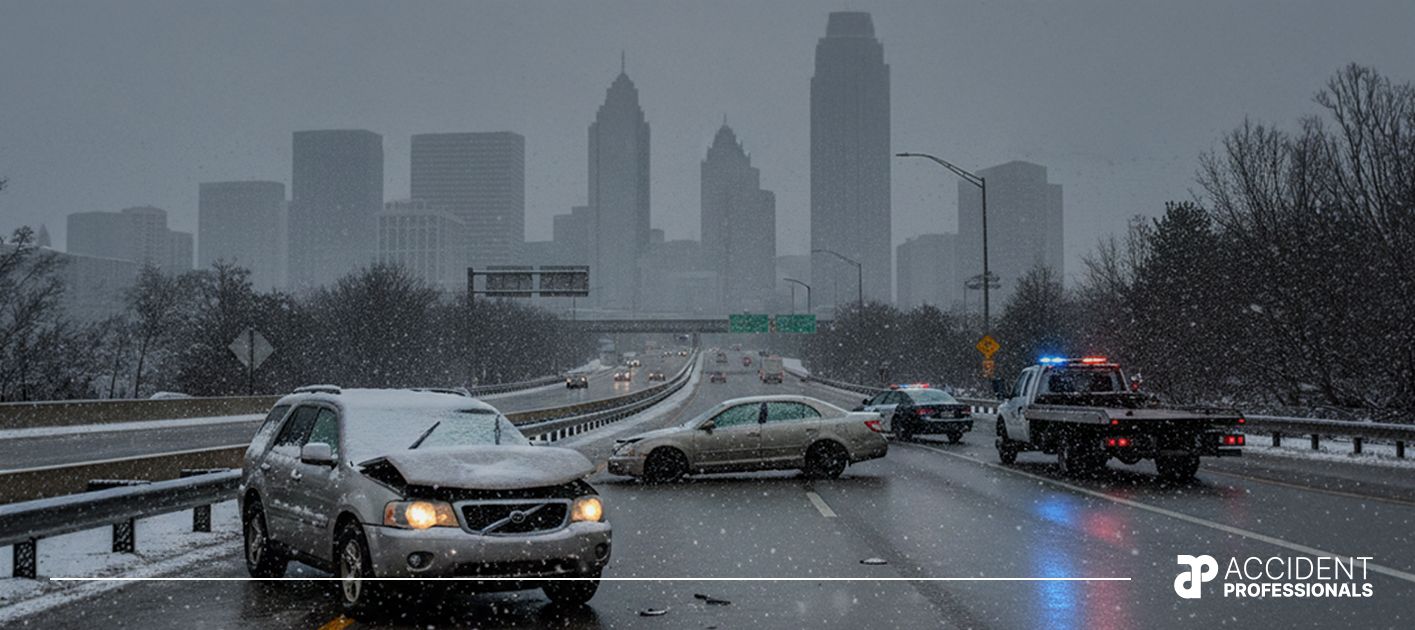
Winter driving in Atlanta may not involve heavy snowfall, but it still creates dangerous conditions for drivers. Rain, black ice, wet leaves, reduced visibility, and shorter daylight hours all contribute to an increase in winter car accidents across Georgia.
If you are involved in a winter car accident, one of the most important steps you can take, after ensuring safety, is documenting the right information. Georgia is an at-fault state, meaning the driver who caused the accident is financially responsible for damages. However, Georgia also follows a modified comparative negligence rule, which can reduce or eliminate compensation depending on how fault is assigned.
Below are the three most important things to document after any winter car accident in Atlanta, and why each one matters under Georgia law.
IntroductionWinter driving conditions in Atlanta may not bring snowstorms, but even light rain, black ice, wet leaves, fog, and early sunsets increase the risk of car accidents. Many Georgia drivers underestimate the danger of slick roads, leading to more accidents in colder months.
If you’ve been involved in a winter car accident, proper documentation is critical, not just for insurance, but to protect your legal rights in Georgia’s fault-based accident system.
In this guide, we’ll break down the top 3 things to document after a winter car accident in Atlanta, and explain how this evidence could impact your personal injury claim.
1. Document the Road & Weather Conditions at the Scene
Winter car accidents are often heavily influenced by environmental conditions rather than reckless driving alone. Rain-soaked pavement, icy patches, standing water, or poorly lit roads can significantly increase stopping distances and reduce traction.
These conditions are temporary. Once the weather changes or traffic resumes, critical evidence may disappear.
When it is safe, document the scene by capturing:
- Photos or video of the roadway and surrounding area
- Close-ups showing water, ice, leaves, or debris
- Lighting and visibility conditions
- Traffic signals, signs, and lane markings
Weather plays a major role in winter accidents. Unlike reckless driving, road conditions can be a key piece of evidence that shifts or reduces your liability. Common winter hazards include:
- Black ice on shaded roads
- Rain-soaked pavement
- Piled-up wet leaves or tree debris
- Poor visibility from fog or glare
- Broken or hidden road signs
Use your smartphone to document:
- Wide-angle photos of the entire scene
- Close-ups of icy patches, standing water, or debris
- Weather conditions (clouds, fog, rain)
- Lighting, time of day, and road signage
Tip:
Capture a video walking around the scene to record audio (e.g. traffic noise, weather) and a time stamp.
Why This Evidence Matters Under Georgia Law
Georgia law allows fault to be divided among parties. If you are found to be 50% or more at fault, you cannot recover damages. If you are less than 50% at fault, your compensation is reduced by your percentage of responsibility.
Documenting hazardous winter conditions helps demonstrate that the crash was influenced by factors outside your control, which can protect your claim from being unfairly reduced.
Georgia uses modified comparative negligence. If you’re 50% or more at fault, you cannot recover damages. Even if you’re found 20% at fault, your compensation is reduced by 20%.
Documenting external factors like poor road conditions can help prove:
- The crash wasn’t fully your fault
- You acted reasonably given the circumstances
- The environment contributed to reduced control
2. Track Injuries and Your Medical Timeline
Many winter car accident injuries do not present immediate symptoms. Cold temperatures and adrenaline can mask pain, especially with soft-tissue injuries like whiplash, back injuries, or joint damage.
To protect your accident claim, you should document:
- Symptoms on the day of the crash and in the days that follow
- Visible injuries such as bruising or swelling (with photos over time)
- All medical visits, diagnoses, and treatment recommendations
- How the injury affects your daily life, work, or mobility
The Georgia Office of Commissioner of Insurance advises consumers to keep documentation, photos, and records related to insurance claims, as this information supports injury verification and claim evaluation.
Not all injuries show up right away. After an accident, the adrenaline spike and colder temperatures can mask symptoms, especially for soft-tissue injuries, concussions, or nerve pain.
To protect your claim, document:
- Initial symptoms (within 24–48 hours)
- Progression of pain, swelling, stiffness, or limited mobility
- Photos of injuries (especially if bruising worsens over time)
- Every medical visit and follow-up, including therapy or imaging
- Impact on your life (e.g. missed work, disrupted sleep)
Tip
Per the Georgia Office of Commissioner of Insurance, all accident-related documentation should be saved to support insurance or legal claims.
Statute of Limitations in Georgia
In Georgia, most personal injury claims must be filed within two years of the accident date. If this deadline passes, you may lose your right to pursue compensation entirely.
Most personal injury claims in Georgia must be filed within 2 years of the accident (O.C.G.A. § 9-3-33). Without timely filing, your right to recover damages may be permanently lost.
If you’re already searching for an accident attorney, accident attorney near me, or lawyer for an accident near me, having this documentation ready can significantly strengthen your case.

3. Gather Police Reports, Driver Details, and Witness Info
Clear identification of the people involved in a winter car accident is just as important as documenting conditions and injuries.
Georgia law requires drivers involved in qualifying accidents to stop and exchange identifying information. The Georgia Department of Driver Services outlines these responsibilities, including stopping at the scene and providing necessary information when injuries or significant damage occur.
You should document:
- Names, phone numbers, and addresses of all drivers
- Insurance information when available
- Vehicle descriptions and license plate numbers
- Witness names and contact information
- The responding officer’s name and accident report number
Tip: Ask the officer where and when you can access the full report (often available online through the Georgia Department of Transportation or local police department).
Police reports and witness statements help establish an official record of what occurred, which is often relied upon by insurance companies and accident attorneys in my area when evaluating fault.
Accurate identification of all parties involved is essential. Georgia law requires drivers in any accident involving injury or significant damage to stop, provide info, and notify authorities.
Be sure to document:
- Name, phone number, and address of all drivers
- License plate numbers and car descriptions
- Insurance details
- Names and contact info of any witnesses
- Officer’s name and accident report number
Why Documentation Is So Important Under Georgia Law
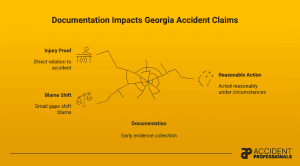
Because Georgia applies modified comparative negligence, even small gaps in documentation can be used to shift blame. Evidence collected early can help demonstrate:
- How winter conditions contributed to the crash
- That your injuries are directly related to the accident
- That you acted reasonably under the circumstances
Strong documentation is often the difference between a denied claim and a successful recovery with the help of an accident law firm or local accident lawyers.
In Georgia’s legal system, early documentation gives your case credibility and makes it harder for insurers to shift blame.
Your notes, photos, and reports help prove:
- Road and weather conditions impacted the crash
- Your injuries directly resulted from the accident
- You acted reasonably and followed the law
Solid documentation often means the difference between full compensation and a denied or reduced claim.
Get Matched With an Atlanta Accident Attorney
If you were injured in a winter car accident and are searching for:
- accident lawyers
- lawyers for accidents near me
- accident law firm near me
- accident lawyers in my area
- accident attorneys in my area
Accident Professionals can help you find accident attorneys who handle Georgia car accident claims and understand Atlanta-area roads and courts. Fill out our form today to get started.
…Accident Professionals can help.
We connect injured drivers with experienced Georgia-based accident lawyers. These professionals understand how to navigate Atlanta traffic law, courts, and winter driving cases.
Frequently Asked Questions
Do I need an accident attorney after a winter car crash?
If you were injured, consulting an accident attorney can help you understand how Georgia’s fault laws apply to your case and whether compensation may be reduced under OCGA §51-12-33.
How do I find accident attorneys in Atlanta?
Many people search for accident attorneys, accident attorneys near me, or lawyer accidents near me after a crash. Accident Professionals connects you with local accident lawyers who focus on Georgia injury law.
Can accident lawyers help if I was partially at fault?
Yes. Accident claim lawyers can still pursue compensation if you are less than 50% at fault, though your recovery may be reduced.
How long do I have to file an accident claim in Georgia?
Most claims must be filed within two years of the accident date. An attorney for accident claims can help ensure deadlines are met.
Should I talk to insurance before contacting a lawyer for an accident near me?
You are not required to give a recorded statement before speaking with a lawyer for an accident near me. Many accident lawyer professionals recommend legal guidance first.
Can an accident law firm near me help with documentation?
Yes. An accident law firm near me or accident lawyers in my area can review photos, medical records, and police reports to strengthen your claim.