


Denied workers' comp claims
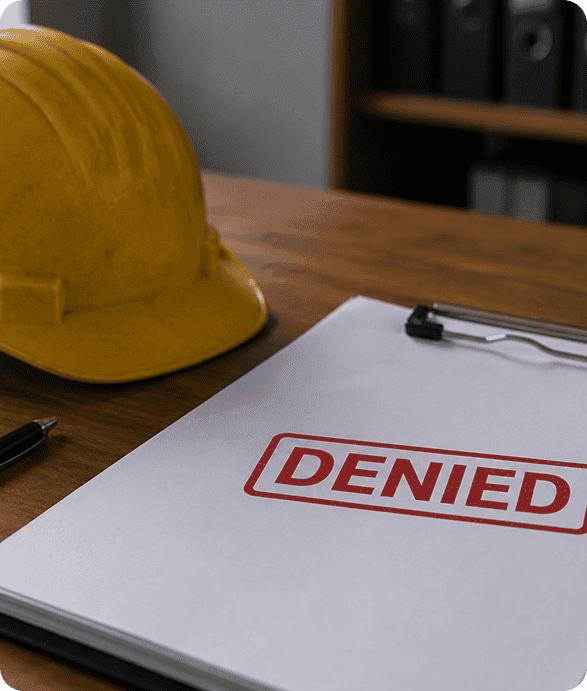
Georgia insurers deny valid claims regularly. A denial is not the end — it's the beginning of a dispute process an attorney can navigate on your behalf.
When you're injured at work in Georgia, you're entitled to medical coverage and income benefits, regardless of who caused the accident. The Accident Professionals network connects injured Georgia workers with vetted workers' compensation attorneys who know how to fight the system and make sure you get every benefit you're entitled to. Free consultation, no fees unless we win.

Trusted Local Network
We connect injured Georgians with experienced local attorneys who understand your case, your courts, and your community.
A workers' compensation claim in Georgia operates differently from every other personal injury claim. It's a no-fault system, meaning you don't have to prove your employer was negligent to receive benefits. If you were injured while performing your job duties, you are generally entitled to medical treatment and income replacement, regardless of fault.
Georgia requires most employers with three or more employees to carry workers' compensation insurance (O.C.G.A. § 34-9-2). That coverage pays for medical care and provides weekly income benefits if your injury prevents you from working. But employers and their insurers have significant financial incentives to minimize your claim, dispute your injury, or push you back to work before you're ready.
Accident Professionals isn't a law firm. We're a curated network of vetted Georgia workers' compensation attorneys who handle these claims from first filing through appeals. We also identify cases where a third party may share liability, opening the door to a separate personal injury claim on top of your comp benefits.
You just got hurt on the job. The last thing you need is more confusion. Our process is simple.
Free call, no pressure, no jargon. Just tell us what happened, where, and whether your employer has been notified.
A vetted local workers' comp attorney — and, where it applies, a personal injury attorney for a third-party claim.
Communication support from first filing through appeals so you always know what's happening next.
Work injuries take many forms, and each type requires a specific legal approach to maximize what you recover under Georgia law.
Georgia insurers deny valid claims regularly. A denial is not the end — it's the beginning of a dispute process an attorney can navigate on your behalf.
Your employer's insurer controls which doctors you see — but that doesn't mean they can limit or deny necessary treatment. An attorney can challenge coverage decisions.
If your work injury results in lasting impairment, you may be entitled to permanent disability benefits. These cases require careful documentation and legal advocacy to value correctly.
If a third party contributed to your injury — a contractor, a driver, a defective equipment manufacturer — you may have a personal injury claim in addition to your comp benefits. Often significantly more valuable.
Georgia law prohibits employers from firing, demoting, or retaliating against employees for filing workers' comp claims. If this has happened, you have additional legal options.
Workplace exposure to toxic substances, chemicals, or repetitive stress can qualify as compensable injuries under Georgia law even without a single identifiable accident.
Georgia's workers' compensation system has specific procedural requirements, and missing any of them can jeopardize your benefits. Follow these steps carefully.
In a non-emergency, you must generally see a doctor from your employer's approved panel. In an emergency, go to the nearest ER first. Unauthorized treatment can be denied for reimbursement.
Georgia law requires you to report a work injury to your employer within 30 days (O.C.G.A. § 34-9-80). Missing this deadline can result in a complete forfeiture of your benefits. Report in writing and keep a copy.
Photograph your injury, the worksite, and any equipment involved. Write down exactly what happened — time, location, what you were doing, what failed. Collect witness names.
Settlement agreements, medical authorizations, and return-to-work forms can all limit your rights in ways that aren't obvious. Don't sign until an attorney has reviewed the document.
Workers' comp settlements are final — once you accept, you typically waive future medical benefits for that injury. A Georgia workers' comp attorney will evaluate whether the offer reflects the full value of your claim.
Georgia workers' comp provides a defined set of benefits, but securing all of them, at the right amounts, for the right duration, requires knowing the system. If a third party contributed to your injury, you may also have a personal injury claim on top of your benefits.

All reasonable and necessary medical care for your work injury, including emergency care, surgery, hospitalization, physical therapy, and prescriptions.

Weekly income benefits equal to two-thirds of your average weekly wage while you're unable to work, or the difference if you return to modified duty at reduced pay.
If your injury results in permanent impairment, you're entitled to scheduled benefits based on the body part affected — or extended benefits if you can never return to work.
If your injury prevents you from returning to your previous job, you may be entitled to vocational retraining to prepare for new employment.
* Prior results do not guarantee a similar outcome. Benefit amounts vary based on the specific facts and circumstances of each case.

After my accident, I had no idea where to start. Accident Professionals connected me with an attorney who explained everything clearly and made the process much less stressful.
Sarah M
Atlanta
The team was responsive, professional, and genuinely helpful. They answered my questions quickly and helped me find legal support that fit my situation.
Janet T.
Orlando, FL
I appreciated having someone guide me through the process. Instead of spending hours searching online, I was connected with an experienced attorney right away.
Melissa T.
Lawrenceville
From the first phone call, someone was actually there. They made sure I understood my options and followed up throughout the process.
David P.
Decatur
Meet our dedicated team of attorneys, committed to providing expert legal guidance and support tailored to your needs.

Brian Moore
404 Lawyer
Injury Attorney

Benjamin J. Rollins
Rollins Law Group
Managing Attorney

Kurtis Badger, Esq.
Badger Law Group
Owner & Founding Attorney
Brian Moore
404 Lawyer
Injury Attorney
Benjamin J. Rollins
Rollins Law Group
Managing Attorney
Kurtis Badger, Esq.
Badger Law Group
Owner & Founding Attorney

Desmond A. Humphrey
Humphrey & Ballard Law
Personal Injury Attorney & Owner

E. David Ballard III
Humphrey & Ballard Law
Personal Injury Attorney & Owner

John Winkenwerder
Wink Law
Attorney at Law

Ivan Bracho Gonzalez
BRAAM Partners
Attorney at Law

Jameson Sackey
Sackey Law LLC
Attorney

Charles Scholle
Scholle Law
Founder and Partner
 Atlanta, GAMarietta, GALawrenceville, GADuluth, GAAcworth, GABuford, GAGainesville, GARoswell, GAAlpharetta, GASandy Springs, GAAugusta, GASavannah, GA
Don't See Your City?
See All Cities
Common questions about workers' compensation claims in Georgia
A denial is not final. In Georgia, you can file a claim with the State Board of Workers' Compensation to dispute a denial (O.C.G.A. § 34-9-100). You have the right to a hearing before an administrative law judge, and the right to appeal further if needed. The process is procedurally complex — which is why having a Georgia workers' compensation attorney from the start significantly improves your chances.
No. Georgia law prohibits employers from retaliating against employees for filing a workers' comp claim (O.C.G.A. § 34-9-11.1). Termination, demotion, reduced hours, or other adverse actions taken in response to a comp claim are illegal. If you believe you've been retaliated against, contact an attorney immediately — retaliation claims have their own separate legal remedies.
In a non-emergency, yes — initially. Georgia employers can maintain a panel of authorized physicians, and you're generally required to seek treatment from that panel. However, you have the right to request a one-time change of physician within the panel. If the panel doctor is not adequately treating your injury, an attorney can challenge the insurer's medical decisions and request an independent medical examination.
You must report your injury to your employer within 30 days of the accident (O.C.G.A. § 34-9-80). After that, you have one year from the date of injury to file a formal claim with the State Board of Workers' Compensation (O.C.G.A. § 34-9-82). Both deadlines matter — missing the 30-day reporting requirement alone can forfeit your benefits entirely.
In most cases, you cannot sue your employer directly — workers' comp is the exclusive remedy against your employer. However, if a third party contributed to your injury, you can file a personal injury lawsuit against them in addition to your workers' comp claim. Common third parties include contractors, vehicle drivers, equipment manufacturers, and property owners. A third-party claim can recover damages that workers' comp doesn't cover — including pain and suffering and full lost wages.
Temporary total disability (TTD) pays two-thirds of your average weekly wage while you're completely unable to work, up to the state maximum. Temporary partial disability (TPD) applies when you return to modified duty at lower pay. Permanent partial disability (PPD) provides a scheduled number of weeks of benefits based on the body part affected and your impairment rating. Permanent total disability (PTD) provides extended benefits for workers who can never return to any form of work.
If your condition worsens after a settlement or award, Georgia allows you to request additional benefits in certain circumstances — particularly for medical treatment. However, if you accepted a full and final settlement that closed out your medical benefits, your options may be limited. This is exactly why you should never accept a final settlement without an attorney reviewing it first.
We're a vetted personal injury attorney network, not a law firm. We match you with a licensed Georgia attorney who handles workers' compensation cases, manage the intake, and stay involved throughout. We also identify third-party personal injury claims that can significantly increase your total recovery. No fees unless your attorney wins your case.

No pressure. No jargon. Just an honest conversation about your options.
Available 24/7 · No upfront fees · Multilingual support